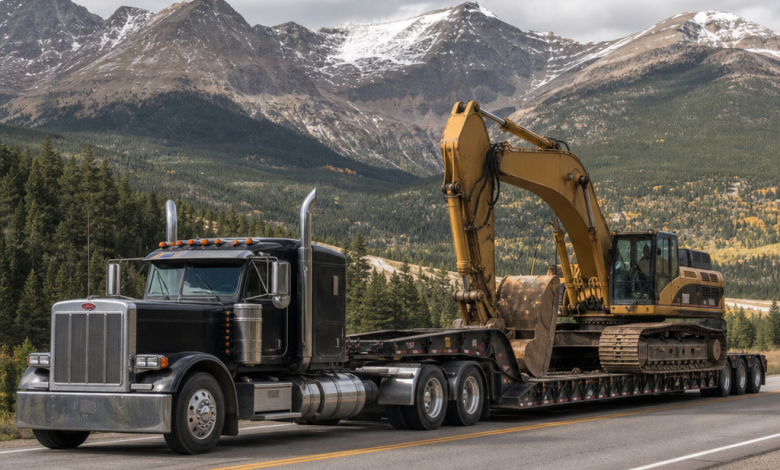
Moving heavy machinery across Colorado is not a task that tolerates improvisation. Whether you are relocating a fleet of excavators to a mountain construction site or shipping industrial generators to a remote energy facility, the logistics involved demand precision, regulatory knowledge, and a deep understanding of the state’s unique terrain. Colorado’s combination of high-altitude passes, narrow mountain corridors, and strict permitting requirements makes heavy equipment transport one of the most complex freight challenges in the American West. Project managers who underestimate this complexity often face costly delays, damaged equipment, and compliance violations that can shut down an entire operation.
Why Colorado Presents Unique Challenges for Heavy Haul Logistics
Colorado is not a flat-state freight corridor. The Rocky Mountains divide the state into dramatically different geographic zones, each presenting its own set of transportation challenges. Passes like Vail, Eisenhower, and Wolf Creek regularly experience closures due to weather, and many routes have strict weight and height restrictions that require careful route planning well in advance of any move. A load that travels smoothly through Kansas or Nebraska may require a completely different approach once it crosses into Colorado.
Beyond geography, Colorado’s Department of Transportation enforces a rigorous permitting system for oversized and overweight loads. Permits must account for axle weight distribution, total load dimensions, travel windows, and escort vehicle requirements. Missing a single detail in this process can result in fines, forced stops, or equipment damage from routes that were not properly cleared. This is why working with experienced professionals who know the state’s regulations inside and out is not optional — it is essential.
Seasonal Considerations That Affect Transport Timelines
Colorado’s seasons play a significant role in determining when and how heavy equipment can be moved. Winter months bring road closures, chain laws, and reduced visibility that can delay even the most carefully planned hauls. Spring thaw periods often trigger temporary weight restrictions on secondary roads, limiting access to job sites that are otherwise reachable during summer and fall. Project managers should build seasonal buffer time into their logistics planning and coordinate with their transport provider early enough to account for these variables. Waiting until the last minute to arrange a haul during peak construction season or winter months is a recipe for frustration.
The Role of Smart Logistics Planning in Heavy Equipment Moves
Effective heavy equipment transport is not just about putting a machine on a trailer and driving it to a destination. It involves a coordinated chain of decisions — from route surveys and permit acquisition to load securement and real-time communication between drivers, dispatchers, and site managers. When any link in that chain breaks down, the consequences ripple outward quickly. A delayed delivery can stall an entire construction crew, push back project milestones, and trigger penalty clauses in contracts.
This is why logistics professionals increasingly rely on integrated communication and operational systems to manage complex hauls. Streamlining operations through smart logistics and communication tools has become a competitive differentiator for transport companies that handle high-stakes freight. Real-time tracking, automated permit documentation, and digital load planning reduce the margin for human error and give clients the visibility they need to make informed decisions throughout the transport process.
Permitting, Escorts, and Compliance: Getting the Details Right
Colorado requires pilot car escorts for loads that exceed certain width and height thresholds, and in some cases, law enforcement escorts are mandatory for particularly large or hazardous moves. Understanding exactly when these requirements apply — and how to coordinate them efficiently — is a skill that separates professional heavy haul operators from general freight carriers. Permit applications must be submitted with accurate load specifications, and any changes to the load configuration after a permit is issued may require a new application entirely. Experienced transport coordinators know how to anticipate these scenarios and build contingency plans before they become problems.
Choosing the Right Heavy Equipment Transporter for Colorado Projects
Not every freight company is equipped to handle the demands of heavy equipment transport in Colorado. The right provider brings more than just the right trailer — they bring knowledge of local regulations, established relationships with permitting authorities, and a track record of successful hauls across the state’s most challenging routes. When evaluating transport partners, project managers should ask about their experience with specific equipment types, their familiarity with Colorado’s permitting process, and their capacity to handle unexpected complications during a move.
Working with a heavy equipment transporter in Colorado that specializes in the state’s unique logistics environment gives project managers a significant advantage. Bear Down Logistics brings deep regional expertise and a commitment to transparent communication throughout every phase of the transport process, ensuring that equipment arrives safely, on schedule, and in full compliance with all applicable regulations.
Equipment Types and Transport Configurations
Colorado’s construction, mining, agriculture, and energy sectors all rely on heavy equipment transport, and the machinery involved varies enormously. Bulldozers, cranes, drilling rigs, combines, and modular building components each require different trailer configurations and load securement strategies. Lowboy trailers are commonly used for tall equipment that needs to clear bridge heights, while step-deck and flatbed configurations serve different dimensional requirements. A knowledgeable transport provider will assess each piece of equipment individually and recommend the most appropriate configuration rather than applying a one-size-fits-all approach.
Industry Resources and Staying Informed
The heavy haul and logistics industry is constantly evolving, with new regulations, technologies, and best practices emerging regularly. Staying current with industry developments helps project managers make better decisions and hold their transport partners accountable. Inbound Logistics is a trusted resource for supply chain and freight professionals, offering in-depth coverage of transportation trends, regulatory updates, and operational strategies that apply directly to heavy equipment logistics.
About Bear Down Logistics
Bear Down Logistics is a Colorado-focused heavy equipment transport company with extensive experience navigating the state’s complex regulatory and geographic landscape. Their team handles the full scope of the transport process — from initial route surveys and permit acquisition to final delivery and documentation — giving clients confidence that every detail has been managed professionally. Whether the job involves a single machine or a multi-unit fleet relocation, Bear Down Logistics approaches each project with the same level of care and operational rigor.
Conclusion
Heavy equipment transport in Colorado demands more than a capable truck and a willing driver. It requires a thorough understanding of the state’s terrain, a mastery of its permitting requirements, and the operational discipline to execute complex moves without costly errors. Project managers who invest in the right transport partner — one with proven Colorado experience and a commitment to smart logistics practices — protect their timelines, their equipment, and their bottom line. In a state where the mountains do not forgive shortcuts, working with specialists is not just a preference. It is the only practical choice.