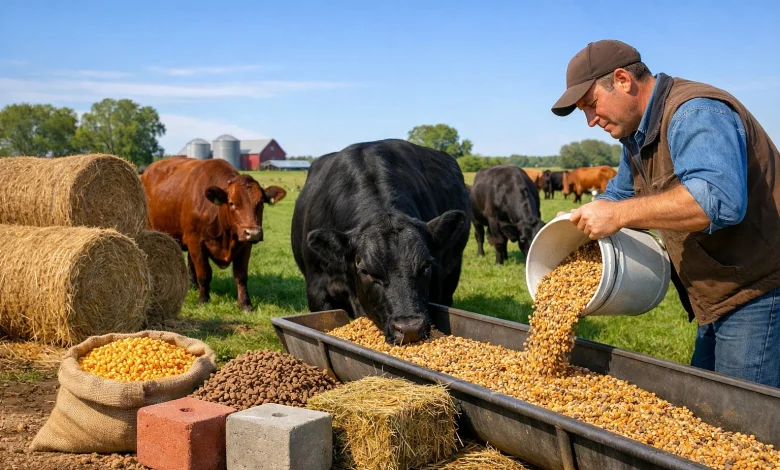
Bringing home your first group of calves or a couple of bred cows is exciting, and it usually comes with a long list of questions. Near the top of that list is what to actually feed them. Walk into any farm supply store and you will find a wall of bags all claiming to be the best cow feed on the market, and the labels start to blur together pretty quickly. The good news is that cattle nutrition is more straightforward than the packaging makes it look, once you understand a few basics about how a cow’s digestive system works and what your animals need at each stage of life.
This guide walks through those basics so you can make feed decisions with confidence instead of guesswork.
Start With the Rumen
Cattle are ruminants, which means they have a four-chambered stomach designed to break down fibrous plants that monogastric animals like pigs, dogs, and humans cannot digest. The largest chamber, the rumen, is essentially a fermentation vat full of microbes that break down grass, hay, and other forages and convert them into energy the cow can use.
This matters for feed selection because it means forage is not optional. It is the foundation of the entire diet. Grain and supplements can fill gaps, but a cow’s digestive system is built around roughage, and problems start when that foundation gets ignored. A diet too heavy in starch can throw the rumen population out of balance and lead to acidosis, bloat, and other expensive issues. So before you think about which bag to buy, think about your forage first.
Forage Comes First
For most beef operations, forage makes up the majority of the diet, and it comes in a few forms.
Pasture is the cheapest feed you will ever have, assuming you have enough acreage. A general rule of thumb is that an acre of decent pasture can support roughly one cow-calf pair during the growing season, though this varies widely by region, rainfall, and forage quality. Rotating animals between paddocks instead of letting them graze everything continuously keeps grass healthier and stretches your grazing season.
Hay is the backbone of winter feeding and any period when pasture is unavailable. Quality varies enormously. Good grass hay that was cut early and stored dry is far more nutritious than stemmy, over-mature hay that sat in the field too long. You will pay more for quality hay, but the animals extract more nutrition from it, so the math often works out in your favor.
Silage and baleage are fermented forages. They pack more energy per pound than dry hay and work well for larger operations, but they require proper equipment, careful harvesting, and good sealing. Spoiled silage can do more harm than good, so beginners are usually better off sticking with hay until the operation grows.
Understand the Big Three: Protein, Energy, and Fiber
When you look at a feed tag or a forage analysis, three numbers matter most.
Crude protein is exactly what it sounds like, the protein content of the feed. Growing calves need the most, often 12 to 16 percent depending on their size and growth rate. Mature cows maintaining themselves on decent pasture need less, often 7 to 10 percent. Lactating cows fall somewhere in between. If your forage is protein-poor, which is common with late-season or weathered hay, a protein supplement fills the gap.
Energy shows up on labels as TDN, or total digestible nutrients. Energy drives growth, milk production, and body condition. Corn is the classic high-energy feed, and it is why grain finishing works, but energy supplementation should be introduced gradually. Rumen microbes need time to adjust to starch, so increase grain slowly over two to three weeks to avoid digestive upset.
Fiber keeps the rumen functioning. Long-stem forage is what keeps the fermentation vat healthy. This is why even grain-finished cattle still receive hay or roughage. A diet that skimps on fiber is a diet headed for trouble.
Match the Feed to the Stage of Life
Not all cattle in your herd need the same thing, and this is where a lot of beginners overspend by feeding one product to everything.
Calves (birth to weaning). Young calves drink milk or milk replacer, and their rumen does not fully develop until a few months of age. Offering a high-quality calf starter grain alongside hay starting in the first weeks of life helps the rumen develop and makes weaning go more smoothly.
Weaned calves and stockers. This is the growth phase, and protein requirements are at their highest. A grower ration in the 12 to 14 percent protein range, paired with good forage, supports steady gains without pushing animals too fast.
Breeding cows. Mature, dry cows in mid-gestation can often get by on average-quality hay and a mineral program. Needs rise in the last third of pregnancy and during lactation, when energy and protein demands climb. This is when body condition scoring earns its keep. A cow going into calving at a condition score of 5 or 6 rebreeds faster and produces more milk than a thin cow.
Bulls. Working bulls burn a lot of energy during breeding season and often come out of it run down. They need quality forage and enough supplemental feed to recover condition before winter.
Do Not Skip the Minerals
Cattle cannot thrive on forage and grain alone. Mineral supplementation is one of the cheapest forms of herd health insurance you can buy. At minimum, provide free-choice access to a good loose mineral containing salt, calcium, phosphorus, and trace elements like copper, zinc, and selenium.
One note for beginners: mineral needs vary by region. Some areas have selenium-deficient soils, others have high molybdenum that interferes with copper absorption. Your local extension office can tell you what deficiencies are common in your area, and it is worth the phone call. Also keep minerals in a covered feeder that stays dry, since wet mineral cakes up and cattle stop eating it.
Learn to Read a Feed Tag
The feed tag tells you more than the product name. Look for the crude protein percentage, the TDN or energy estimate, the fiber level, and the ingredient list. Medicated feeds will state the medication and any withdrawal warnings clearly. If you are feeding multiple species, never cross-use feeds. Products intended for other livestock can contain additives that are harmful to cattle, and cattle feeds can be dangerous to horses or small ruminants. Keep bags labeled and stored in dry bins off the ground.
Common Beginner Mistakes
A few errors show up again and again with new cattle owners.
Feeding too much grain too fast is the big one. Cattle found dead or sick with bloat or acidosis usually got into more starch than their rumens were ready for. Introduce concentrates slowly and never make abrupt ration changes.
Underestimating winter hay needs is another. A lactating cow in cold weather can eat 25 to 30 pounds of hay a day. Buy or bale more than you think you need, because running short in February is a stressful and expensive problem.
Ignoring water sounds silly to mention, but cattle drink a tremendous amount, especially in heat. A cow can drink 15 to 20 gallons a day in summer, and inadequate water tanks will slow gains faster than any feed decision you make.
Finally, do not chase the cheapest price alone. Cheap feed with poor nutrition costs more in the long run through slow gains, poor body condition, and open cows. Judge feed by cost per unit of nutrition, not cost per bag.
The Bottom Line
Choosing the right feed for a beef herd comes down to a few principles. Build the diet around quality forage, supplement protein and energy based on the animal’s stage of life, keep minerals in front of them year-round, and make any ration changes gradually. Start there, watch your animals’ body condition and behavior, and adjust as you learn. Cattle are forgiving animals when the fundamentals are right, and the fundamentals are simpler than the feed aisle makes them seem.