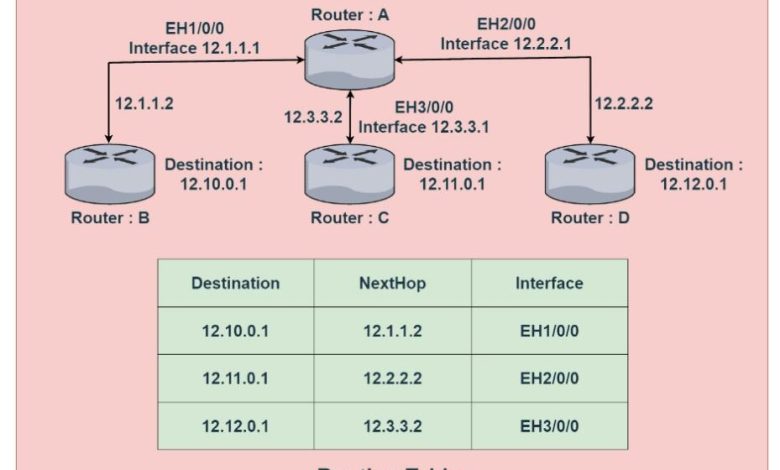
Networking relies on routers to direct traffic efficiently. Two critical components enabling this are the Routing Table and the Forwarding Information Base (FIB) Table. For any network professional, understanding these elements is crucial. Routing Tables provide a comprehensive view of the network topology, helping routers determine the best path for data packets. In contrast, FIB Tables contain streamlined information for the most efficient path selection, derived directly from Routing Tables. This blog will delve into the nuances of both, exploring their purposes, how they’re built, and the distinct roles they play in maintaining network performance. By the end, you’ll have a solid grasp of how these tables work together to keep your network running smoothly.
What Is a Routing Table?
Purpose and Role of Routing Tables
A Routing Table serves as a database storing all possible paths data packets can take to reach their destination across a network. Its primary role is to guide the router in selecting the most efficient path from multiple options. Routing Tables encompass static routes, manually configured by network administrators, and dynamic routes, automatically updated through routing protocols like OSPF, BGP, and EIGRP. By maintaining this detailed map of potential paths, Routing Tables enable routers to make informed decisions, ensuring data packets follow the quickest and most reliable routes.
How Routing Tables Are Built
Routing Tables are constructed using routing protocols, which are essential for exchanging routing information between routers. When a router receives updates from its neighbors, it integrates this new data into its existing table. For instance, if OSPF is the chosen protocol, routers within the same area share information about network changes, ensuring each router’s table is up-to-date. Additionally, network administrators can manually enter static routes to dictate specific paths. The combination of these automatically and manually updated entries ensures that the Routing Table covers all available routes, providing a robust foundation for efficient packet forwarding.
Routing Table Entries: Key Components
Each entry within a Routing Table includes critical components that aid in path selection. These typically consist of the destination network, the subnet mask, the gateway or next-hop IP address, and the interface through which the packet should be sent. For dynamic routes, the Routing Table also stores metrics, such as hop count or bandwidth, which help determine the best path among multiple options. This detailed context allows routers to evaluate and select the most efficient route for each data packet, balancing speed and reliability by leveraging both static and dynamic information.
What Is a Forwarding Information Base (FIB) Table?
Functionality of FIB Tables in Packet Forwarding
The FIB Table plays a pivotal role in real-time packet forwarding, containing streamlined data for swift decision-making. Unlike a Routing Table, which records all potential paths, the FIB Table focuses solely on the optimal path for each destination network. When a router receives a data packet, it consults the FIB Table to quickly identify the best next-hop IP address and the corresponding interface. By referencing this optimized subset of the Routing Table, the router can forward packets with minimal delay, enhancing overall network performance and efficiency.
How FIB Tables Are Derived from Routing Tables
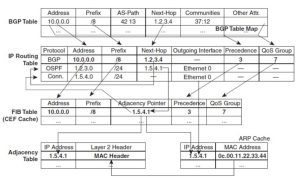
The FIB Table is essentially a streamlined version of the Routing Table, designed to expedite packet forwarding. When constructing the FIB, a router analyzes the entries in the Routing Table to identify the best path to each destination network. This selection process hinges on metrics provided by routing protocols and predefined network policies. The chosen optimal paths are then compiled into the FIB Table, which prioritizes ease of access and speed. By maintaining only the best routes, the FIB Table ensures that packets are forwarded quickly and efficiently, minimizing latency in network traffic.
Key Differences Between Routing and FIB Tables
While both Routing and FIB Tables are essential for network operations, they serve distinct functions. The Routing Table contains a comprehensive list of all known paths to various networks, aiding in route selection and providing a broad view of network topology. In contrast, the FIB Table holds only the best routes, derived from the Routing Table, for immediate packet forwarding. This distinction means that the Routing Table is fundamental for route calculation, while the FIB Table is critical for fast, efficient packet delivery. By working together, these tables ensure both thorough route planning and rapid execution.
How Are Routing and FIB Tables Used Together?
Routing Table’s Role in Path Selection
The Routing Table excels in determining the most efficient path for data packets. It considers all possible routes, weighs various metrics like hop count and link cost, and selects the best option. This process is dynamic, adapting to changes in the network such as link failures or congestion. By providing a detailed map of the network’s topology, Routing Tables enable routers to make informed decisions about which paths to prioritize, ensuring data travels swiftly and reliably from source to destination. These decisions are then relayed to the FIB Table for execution.
FIB Table’s Role in Packet Forwarding
Once a path is chosen by the Routing Table, the FIB Table takes over for instantaneous packet forwarding. When a packet arrives, the router consults the FIB Table to quickly find the pre-determined best route to its destination. This rapid reference capability is crucial for maintaining high-speed data transfer, reducing latency, and ensuring efficient traffic flow. Unlike the Routing Table, which constantly updates and processes new route information, the FIB Table stays focused on execution, maintaining only the most efficient paths for immediate use.
Real-World Networking Examples
In practice, Routing and FIB Tables are vital for daily network operations. For instance, in enterprise networks, a router receiving multiple updates from different branches uses its Routing Table to determine the most efficient path for internal communication. It then updates its FIB Table to reflect these optimal routes. Similarly, internet service providers (ISPs) rely on FIB Tables to manage vast amounts of inbound and outbound traffic. When a user requests a webpage, the ISP’s router quickly consults its FIB Table to deliver the data promptly. Such seamless coordination between Routing and FIB Tables ensures robust, efficient, and reliable network performance.
Why Are Routing and FIB Tables Important in Networking?
Ensuring Network Efficiency with Routing Tables
Routing Tables are pivotal in maintaining network efficiency. By mapping all possible routes and evaluating their respective metrics, these tables enable routers to select the most effective paths for data transmission. This comprehensive evaluation minimizes unnecessary hops and delays, ensuring that data packets reach their destinations quickly and reliably. Moreover, dynamic updates via routing protocols keep Routing Tables current, adapting to real-time network changes and preventing potential bottlenecks. As a result, network performance remains consistent, even as conditions fluctuate.
Optimizing Packet Delivery with FIB Tables
FIB Tables are crucial for optimizing packet delivery by providing fast access to the best routes. When a router receives a packet, it uses the FIB Table to determine the most efficient path without delay. This quick decision-making process reduces latency and enhances the speed of data transfer, which is especially important in high-traffic networks. By focusing solely on the best available routes, FIB Tables streamline the forwarding process, ensuring that packets reach their destination as quickly as possible. This targeted approach significantly boosts overall network efficiency and performance.
Impact on Network Performance and Scalability
The synergistic operation of Routing and FIB Tables directly impacts network performance and scalability. Routing Tables provide a flexible, adaptive framework that adjusts to network changes, while FIB Tables ensure the rapid execution of the chosen paths. This dual functionality allows networks to handle increased traffic loads and scale efficiently without sacrificing speed or reliability. As networks grow in complexity, the clear delineation of responsibilities between Routing and FIB Tables ensures that both strategic planning and tactical execution are optimized, maintaining high performance across all scenarios.
Conclusion
In summary, Routing and FIB Tables are integral to modern networking, each playing a distinct yet complementary role. Routing Tables, often part of the routing information base, offer a detailed roadmap of all possible paths, essential for strategic decision-making in path selection. FIB Tables, on the other hand, operationalize these decisions, ensuring fast and efficient packet forwarding. Together, they form the backbone of any robust network, contributing to efficiency, reliability, and scalability. Understanding their differences and how they interact is vital for any network professional looking to optimize network performance and ensure seamless data transmission. By leveraging both tables effectively, networks can achieve high-speed routing and maintain robust performance even under heavy traffic loads.